How to Remove Water Spots from Car Paint Without Damaging the Finish
💧 How to Remove Water Spots from Car Paint Without Damaging the FinishHave you ever washed your car only to find ugly white marks left behind after i...
💧 How to Remove Water Spots from Car Paint Without Damaging the Finish
Have you ever washed your car only to find ugly white marks left behind after it dries?
Those stubborn marks are called water spots, and if ignored for too long, they can permanently damage your vehicle's paint.
The good news?
Most water spots can be removed safely at home if you use the correct techniques and products.
In this guide, you'll learn exactly how to remove water spots from your car without causing scratches or paint damage.
🚘 What Are Water Spots?
Water spots are mineral deposits left behind after water evaporates from your vehicle's surface.
Common minerals include:
Calcium
Magnesium
Silica
Salt deposits
When water dries naturally, these minerals remain on the paint and create visible spots.
⚠ Why Water Spots Are Dangerous
Many car owners think water spots are only cosmetic.
Unfortunately, that's not always true.
If left untreated:
❌ Minerals can bond to paint
❌ Clear coat damage may occur
❌ Paint gloss decreases
❌ Permanent etching can develop
The longer water spots stay on the surface, the harder they become to remove.
🔍 Types of Water Spots
Type 1: Fresh Mineral Deposits
These are the easiest to remove.
Usually caused by:
Rainwater
Hard water
Sprinklers
These sit on top of the paint surface.
Type 2: Bonded Mineral Deposits
Minerals begin attaching themselves to the clear coat.
These require stronger cleaning methods.
Type 3: Etched Water Spots
The most severe type.
Minerals have already damaged the paint surface.
Often requires polishing or paint correction.
🧰 Tools You'll Need
For safe removal:
✔ pH Neutral Car Shampoo
✔ Microfiber Towels
✔ Water Spot Remover
✔ Clay Bar Kit
✔ Detailing Spray
✔ Dual Action Polisher (optional)
✔ Paint Polish (for severe spots)
Step 1: Wash the Vehicle Properly
Before attacking water spots:
🚿 Perform a complete wash.
This removes:
Dust
Dirt
Surface contaminants
Never attempt spot removal on a dirty vehicle.
Doing so can create scratches.
Step 2: Inspect the Severity
After drying the vehicle:
Examine spots under sunlight or LED lighting.
Ask yourself:
🔹 Can I feel the spot?
🔹 Does it disappear when wet?
🔹 Has it etched into the paint?
The answer determines your next step.
Step 3: Use a Dedicated Water Spot Remover
For most vehicles, this is the safest solution.
Water spot removers dissolve mineral deposits without damaging clear coat.
Application Process
1️⃣ Spray product onto affected area
2️⃣ Let it dwell briefly
3️⃣ Gently wipe with microfiber towel
4️⃣ Buff clean
Most fresh water spots disappear immediately.
✨ Step 4: Try a Clay Bar Treatment
If spots remain:
Use a clay bar.
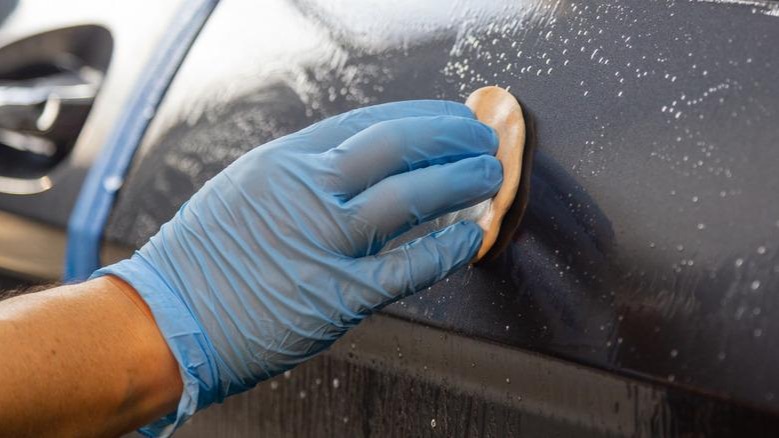
Clay bars remove bonded contaminants from the paint surface.
Benefits
✅ Smoother paint
✅ Cleaner surface
✅ Better shine
✅ Improved wax/coating performance
Always use clay lubricant during the process.
🔥 Step 5: Polish Stubborn Water Spots
For etched spots:
Machine polishing may be required.
A light polish can remove:
Minor etching
Surface defects
Water spot stains
This restores clarity and gloss.
⚠ Important Warning
Do NOT immediately use:
❌ Sandpaper
❌ Abrasive compounds
❌ Kitchen cleaners
❌ Rough sponges
These often cause more damage than the water spots themselves.
🌞 How to Prevent Water Spots
Prevention is easier than correction.
Follow these professional tips:
✅ Dry Your Car Immediately
Never allow water to air dry.
Use a high-quality microfiber drying towel.
This alone prevents most water spots.
✅ Avoid Direct Sunlight
Washing under hot sunlight causes rapid evaporation.
This leaves minerals behind before you can dry the vehicle.
Wash during:
🌅 Early Morning
or
🌇 Evening
✅ Use Filtered Water
Hard water contains high mineral content.
Using filtered or softened water reduces spotting significantly.
✅ Apply Ceramic Coating
Ceramic coatings create a hydrophobic layer that helps water slide off the paint.
Benefits include:
💦 Better water beading
✨ Easier drying
🛡 Reduced mineral buildup
✅ Use a Quick Detailer After Washing
A quick detailer helps remove leftover moisture while adding gloss and protection.
Professional detailers use this trick daily.
🚫 Common Water Spot Removal Mistakes
Mistake #1
Ignoring spots for months.
The longer they stay, the harder they become to remove.
Mistake #2
Using household vinegar incorrectly.
While vinegar can help dissolve minerals, improper dilution may affect sensitive surfaces.
Always use products specifically designed for automotive paint.
Mistake #3
Using dirty towels.
A dirty towel can create scratches while removing spots.
Mistake #4
Polishing unnecessarily.
Always start with the least aggressive solution first.
💎 Professional Detailer's Secret
The majority of severe water spot problems occur because cars are left to dry naturally after washing.
Professional detailers almost never allow water to evaporate on paint.
Instead, they:
✔ Blow dry
✔ Towel dry
✔ Apply drying aids
This simple habit prevents most water spot issues before they start.
🏁 Final Thoughts
Water spots may seem harmless, but they can permanently damage your vehicle's finish if left untreated.
The safest approach is:
1️⃣ Wash properly
2️⃣ Use a dedicated water spot remover
3️⃣ Clay if necessary
4️⃣ Polish only when needed
5️⃣ Protect with wax or ceramic coating
With proper maintenance, your paint can remain glossy, smooth, and spot-free for years.