Best Microfiber Towels for Car Detailing: A Complete Buyer's Guide
Best Microfiber Towels for Car Detailing: A Complete Buyer's GuideIf you've ever spent hours washing and polishing your car, only to notice...
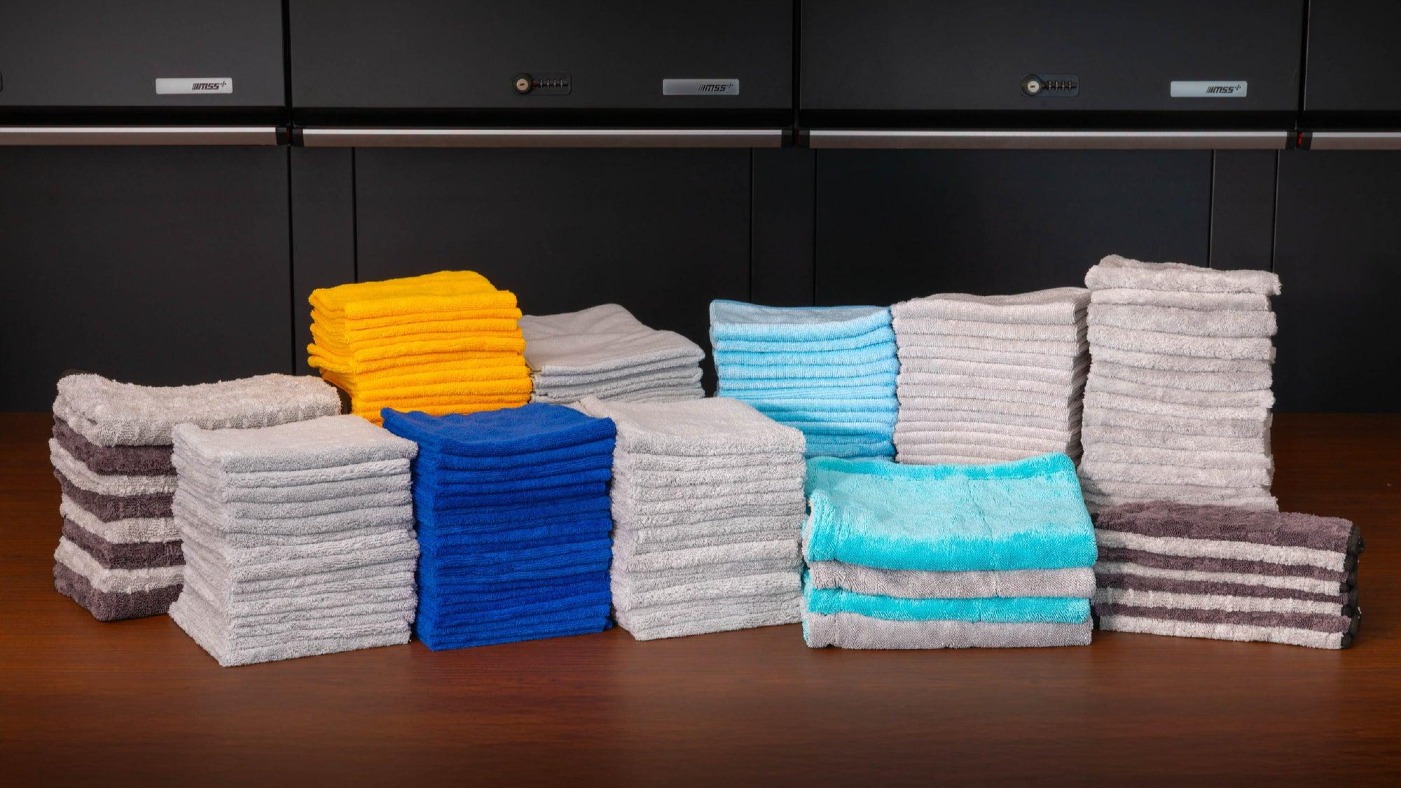
Best Microfiber Towels for Car Detailing: A Complete Buyer's Guide
If you've ever spent hours washing and polishing your car, only to notice fine scratches under sunlight later, there's a good chance the problem wasn't your shampoo, wax, or technique.
It was the towel.
Most people underestimate how important a good microfiber towel is in car detailing. In fact, many professional detailers will tell you that the towel touching your paint is just as important as the products you're using.
I've seen people spend thousands on ceramic coatings and premium waxes, then dry the car with an old bath towel. That's like buying expensive shoes and walking through mud.
Let's talk about what actually matters when choosing microfiber towels for car detailing.
Why Regular Cloths Are Bad for Car Paint
A standard cotton cloth may feel soft to your hands, but your car's paint tells a different story.
Cotton fibers tend to drag dirt across the surface. Over time, this creates tiny scratches known as swirl marks.
You might not notice them immediately. But park your car under direct sunlight and suddenly those circular scratches become impossible to ignore.
Microfiber towels work differently.
Their fibers are extremely fine and designed to lift dirt away from the surface rather than dragging it around.
That's why virtually every professional detailing shop uses microfiber towels for everything—from washing and drying to polishing and ceramic coating application.
Not All Microfiber Towels Are the Same
This is where many car owners get confused.
They see two microfiber towels online:
One costs ₹99
Another costs ₹499
Both look similar.
But they perform very differently.
The biggest difference is usually GSM.
Understanding GSM: The Number That Matters
GSM stands for Grams Per Square Meter.
Simply put, it tells you how thick and plush the towel is.
200–300 GSM
These are thinner towels.
Good for:
Glass cleaning
Door jambs
Not ideal for paint drying.
350–500 GSM
This is the sweet spot for most car owners.
Perfect for:
Quick detailers
Wax removal
General detailing
A quality 400 GSM towel can handle most detailing tasks comfortably.
600 GSM and Above
These are premium plush towels.
Ideal for:
Drying vehicles
Ceramic-coated cars
Final buffing
The thicker fibers reduce the chances of scratching sensitive paint surfaces.
The Biggest Mistake People Make
Many car owners use the same towel for everything.
One day it's cleaning wheels.
The next day it's drying paint.
That's a disaster waiting to happen.
Your wheels collect brake dust, tiny metal particles, and road grime. Even after washing the towel, contaminants can remain trapped inside.
Professional detailers always keep separate towels for different jobs.
A simple system works best:
✅ Paint Towels
✅ Glass Towels
✅ Interior Towels
✅ Wheel Towels
This small habit can save your paint from countless scratches.
What Towel Should You Use for Drying?
Drying is where most scratches happen.
A freshly washed car is still vulnerable because tiny dirt particles may remain on the surface.
For drying, look for:
Twist Loop Microfiber Towels
Korean Microfiber Towels
Plush Drying Towels
These absorb large amounts of water without requiring excessive pressure.
If you're dragging a towel across the paint while pressing hard, you're increasing the risk of marring.
The best drying towel is the one that does the work for you.
What About Ceramic-Coated Cars?
If your vehicle has ceramic coating, towel quality becomes even more important.
Ceramic coatings make maintenance easier, but they don't make the paint scratch-proof.
Using cheap towels can still create swirl marks.
For coated vehicles, I usually recommend:
500 GSM or higher
Edgeless microfiber towels
Premium drying towels
The extra softness helps preserve that glossy finish you're trying to protect.
A Quick Word About Edges
This detail gets overlooked all the time.
Some microfiber towels have stitched edges that can become rough after repeated washing.
Those edges can leave scratches.
That's why many detailing enthusiasts prefer edgeless microfiber towels.
No exposed stitching.
No unnecessary risk.
Just soft microfiber touching the paint.
How to Wash Microfiber Towels Properly
Even the best towel becomes useless if you don't maintain it correctly.
A few simple rules:
✔ Wash separately from household laundry
✔ Use microfiber detergent or mild liquid detergent
✔ Avoid fabric softeners
✔ Air dry when possible
✔ Store in a clean container
Fabric softeners are especially harmful because they clog microfiber strands and reduce their cleaning ability.
Are Expensive Microfiber Towels Worth It?
Honestly, yes.
Not because they're expensive.
Because they're cheaper than paint correction.
A premium microfiber towel may cost a few hundred rupees more, but removing swirl marks later can cost thousands.
When you think about it that way, a quality towel is one of the most affordable upgrades you can make to your detailing kit.
Final Thoughts
If there's one detailing accessory I never compromise on, it's microfiber towels.
The right towel protects your paint, improves product performance, and makes every detailing job easier.
If you're building a car care kit, start with:
A quality drying towel
A few plush buffing towels
Dedicated glass towels
Separate wheel towels
It's a small investment that pays off every single time you touch your car.
Your paint will stay glossier, cleaner, and swirl-free for years.